
My Dadiji’s Story of the Partition of Panjab
Before 1947
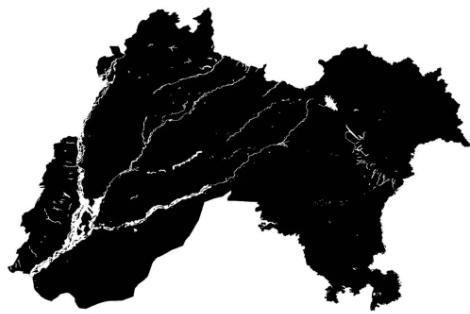
Manga, district of Sheikhupura, Panjab, Pakistan – this was my Dadiji’s pind (village) before 1947. Her village was so special to her. It had a school, a Gurdwara, stores, but most importantly it had the kheti (farming), miti (soil) and fasal (crops) of her family. It wasn’t just a place, it was HOME.
The Beginning: A voice worth capturing
Today, August 15th, 2025 marks the 78th anniversary of the partition of Panjab. My Dadiji (paternal grandmother) and Dadaji (paternal grandfather) had both lived through the partition. Never having had the chance to hear my Dadaji’s (paternal grandfather’s) story — his childhood, his struggles, and his memories of Partition — made me realize just how important it was to record my Dadiji’s story now — to preserve a part of history that is often overshadowed and forgotten.
In May 2025, I finally did what I had been meaning to do for years—I sat down with her in Surrey, British Columbia, and pressed “record.” My curiosity about the Partition of 1947 had long lingered, especially as I got older and became aware of what we never got to know about my Dadaji—his silenced stories, his untold memories.
That day with my Dadiji was the first time we spoke formally about her past, but in truth, the conversation had begun years ago, quietly—between sips of chaa and simple greetings like “Meri pauthi kiven hai?” (“How is my granddaughter doing?”)—always drifting back to Panjab. I knew, deep down, that if I didn’t capture her story now, it might be lost forever.
Before we began, she hesitated as she was unsure if what she said would be proper. “Only Waheguru (Wonderful Lord) knows if what I say is right,” she said gently, “but I will tell you that I will be truthful and honest as possible from what I remember.”
Her story
My Dadiji began with a brief history of Maharaja Ranjit Singh’s rule. The Sikh Raj, she said, was strong, and Panjab during that time was a vast region, one of the largest empires of its time. She described Maharaja Ranjit Singh as one of the world’s greatest leaders. “He was a just and good leader, there will be no king like him”, she said with deep conviction.
She then continued, after Maharaja Ranjit Singh’s death, the British annexed the subcontinent, marking the beginning of a long period of colonial rule. Over time, resistance grew through the anti-colonial independence movement. In the region of Panjab, she said, the struggle was marked by great political tensions and religious divisions.
My Dadiji recalled that the independence movement involved many trials and tribulations, including the sacrifices of three Sikh yodha (warriors), among other notable figures.
Ultimately, this led to the British losing control of the Raj, dividing Panjab into two, and creating two nation-states.
My Dadiji was only nine years old when Panjab was divided between India and Pakistan at midnight on August 14 – 15, 1947.
The Announcement “Leave — Just As You Are”
She remembers a jeep with British officials driving through the pind, announcing updates about the division over a loudspeaker. That’s when she first heard Partition was happening. Many were shocked, confused. No one could believe it. How can Panjab—known as the Land of Five Rivers— be divided?
With the announcement, people began to move, often taking little to nothing with them—leaving behind homes full of belongings and memories, she said. They were often told, “Leave—just as you are.” The last thing she remembers is closing the doors of her house, believing she would come back.
Refugee Camp: Sacha Sauda
My Dadiji, described leaving her pind, Manga, for Sacha Sauda, a refugee camp set up nearby in Pakistan. The camp had villagers from all over West Panjab (Pakistan) and was crowded with people.
Here, my Dadiji stayed for many months with her family, sleeping in plastic tents.
She witnessed trains, trucks, and cars crowded with people migrating from both sides as Panjab was divided. Some of these vehicles were hijacked, and many travelers were killed trying to cross the border.
News of disappearing or ambushed vehicles travelled fast within communities, causing fear among everyone, she recalls.
Terrified of losing family honour during the violence, many even pushed their mothers, daughters, and wives into wells — making them among the most vulnerable during that time.
Later, she recalled, both sides of the border were fighting—all because of religious differences—forgetting that, in the end, we are all one.
“We were neighbors, friends, family once—and suddenly became enemies,” she said.
Station Incident
As months passed in Sacha Sauda, the refugee camp became overcrowded and my Dadiji recalled that she and her family, like many others, sought refuge in an abandoned pind nearby. She described how it wasn’t abnormal to have abandoned pinds as people were migrating away to other villages. There were many places where houses were often left abandoned for many reasons—some had been forced to relocate, while others sought safety from communal violence.
This nearby pind Dadiji and her family temporarily stayed in was preferable to the overcrowded tents in Sacha Sauda, especially with her Taya ji (her father’s brother) and maa ji (mother) falling ill. The house was close to both the refugee camp and the train station.
However, no matter where they went they were never truly safe. The station near where they were staying was one of many stations affected by communal violence and displacement. She recalled how smoke became a common occurrence at the camp—its smell and sight a signal that more had been killed.
One day during their stay, she heard a gunshot erupt from the train station. To her surprise, one of the bullets hit the wall near her. Before she could react, her Taya ji yanked her by the shirt, telling her to hide and go inside. She remembered the loud screams and cries.
Later, she learned what had happened – as people waited to board the train, individuals already inside waiting to cause harm, opened fire on the crowd as the train was slowing down to a stop. Everyone waiting to board the train was killed that day.
Last Vehicle
Eventually, her family boarded the last vehicle leaving Sacha Sauda for Amritsar. However, near Lahore, the vehicle was stopped by some who would not let them travel further. My Dadiji and her family, like everyone else in line fleeing for Amritsar, waited for three nights on the streets near a Gurdwara—before buses took them the rest of the way and finally reaching Amritsar.
There, her Pouaji (dad’s sister), took them to her pind close to Amritsar for a couple of months. My Dadiji later settled in Karnal and slowly began a new life.
Shukrana (Thankfulness)
She says her story is just one among millions, and rabb da sukriya (thank God) to have made it across the border safely. For others, she said that wasn’t the case. Often, referencing her husband, my Dadaji, who had an even more difficult time crossing the border.
I asked her if there was anything else she wanted to share about the Partition.
She said, “When I was young, I used to think about Pakistan and how much I loved it and missed my pind.”
During that time, after my Dadiji and her family settled in India, she recalled that “Arriving in India, I used to often cry and ask, “Mera pind kithe hai?” (Where is my pind).”
She paused, then added, “But now… I don’t think about it as much. I guess as I grow older and with my age, I don’t think I will be able to go back to my pind.”
A Story of Remembrance
She would end her reflection with sadness in her voice by saying, “Since the partition, Panjab is not what it used to be. It has been continually divided into smaller pieces, suffering deeply from this division.”
My Dadiji’s story is not just history—it is one of loss, confusion, fear, resilience and strength. It is not just a moment of forced relocation — it was a moment of leaving behind her pind, a village left behind. A pind that now sits in a divided Panjab: a pind that may lie empty, no longer exist, or now home to another family. Something, I believe, she may never truly know.
Her story, like millions of others, is not written in textbooks. It lives in memories—in the fragile, flickering recollections of those who lived it.
Caption/ Note
This article is based on an interview I recorded with my grandma, as well as conversations we’ve had in passing. As I reviewed the recordings, I noticed the conversation often shifted back and forth between the present and the past. During the interview, I allowed my grandmother to speak as much as she could, while I asked questions that drew her back to her childhood, the Partition, and the years that followed. I tried my best to piece everything together in chronological order. Thank you for taking the time to read it. If you would like to share your elder’s story, please connect with us through our email: [email protected]
Wish She was able to visit the Pakistan and see her Pind.